We at A&M have a penchant for
self-regard. Not only must every good deed, no matter how miniscule, be
trumpeted as if it were some herculean effort, we have failed at what many believe is our core mission:
A&M, we are incessantly told, is home to
the friendliest students in the nation.
But if you have to say it out loud…
For 13 of the past 17 years, The Princeton
Review has ranked Texas A&M as one of the 20 most “LGBT-Unfriendly” student
populations in the country. Recently, in a kerfuffle that garnered national media
attention, we secured a spot on The Princeton Review’s list for next year.
The offense centered on The GLBT Funding
Opt Out Bill (SB 65-70), which was introduced to A&M’s Student Senate in
early March. Authored by Northside Senator Chris Woosley, the bill requested
that “students who object to funding the GLBT Resource Center through their
student fees and tuition for religious reasons be allowed to opt out from
funding the same.”
With its anodyne wording, few realized SB
65-70 would eviscerate the goodwill A&M earned when Johnny Manziel won the
Heisman. But ignorance is no excuse. On campus and in the media the bill was
rightly seen as targeting one of A&M’s most vulnerable minorities.
The
Human Rights Campaign lambasted the
bill as “a direct attack on members of the LGBT community at Texas A&M.” It
reasoned that the bill’s implementation would segregate LGBT Aggies into
“second class citizens” by “significantly reduc[ing] resources for a much
needed institution.”
Perhaps the best response, though, came
from Campus Pride, which issued a low-key opinion with which The Left whole-heartedly agrees -- “while
SB 65-70 claims to promote religious freedom, we cannot ignore that it only
allows students with one religious belief to control how their student fees are
used: only religious traditions that disapprove of LGBT interests are given a
voice... Whatever the intentions of the bill may be, the effect is clearly discriminatory.”
The
Left
would add, however, that “religious freedom” does not entail exemptions to
rules which are generally applicable. It is a constant refrain of this news
site, and deservedly so, that religion is a worldview like any other: the
religious can mobilize, advocate, elect, and -- we too often forget -- be compelled to do things they aren’t otherwise
inclined to do.
Arguing otherwise is to push for a gross
political entitlement never before recognized.
To
quell the ensuing indignation -- while simultaneously missing the thrust of it
-- Woosley changed “The GLBT Funding Opt Out Bill” to “The Religious Funding Exception Bill.” The new version requested that “students who object to
funding various services through their student fees and tuition for religious
reasons be allowed to opt out from funding the same.”
The altered
document passed the Senate with 35 votes for, 28 against, but was vetoed by Student
President John Claybrook. In a confident, well-worded explanation, Claybrook
noted that “what this bill represents still remains and must be done away with,”
and that “[n]ow, more than ever, is the time to show great resolve and come
together”.
Alas,
A&M’s faculty was latent in its response; they did not “come together”
until after the veto. Two statements stood out.
The first
came from the Department of Anthropology, which strongly reaffirmed their
“commitment to diversity and support of groups that have felt discrimination on
campus,” as well the “GLBT community and the GLBT Resource Center.”
The
second came from University President Bowen Loftin, who, in a rather lukewarm email,
said that A&M’s recent discourse “has, in some cases, lacked civility and
discounted each individual’s right to free expression of their ideas and
beliefs.”
Dr.
Loftin’s email was poorly timed; an hour later The Dallas Voice broke a story that at least
one LGBT Aggie had received a death threat.
In an interview with The Left, Camden Breeding, an activist and senior at Texas A&M,
confirmed the incident: “All I can say about the threat is that it was a phone
call that threatened death upon ‘faggots,’” he said.
Lacking civility, indeed.
Student Senators recently upheld Claybrook’s
veto. Shortly thereafter, a motion to censure Woosley was brought to the floor,
but didn’t get the necessary votes for a second.
While solid efforts at rehabilitating
A&M’s fractured ego, these legislative moves will not elicit the media
attention SB 65-70 did in either of its forms; they will not repair the
self-inflicted damage done to our university’s reputation.
“When I was a boy and I would see scary
things in the news, my mother would say to me, ‘Look for the helpers. You will
always find people who are helping.’” -- Mr. Rodgers
It
is true, if not always affirmed, that the measure of a country’s response to
terrorism is akin to the measure of an immune system’s response to disease: It
is not solely a matter of prevention, but of perseverance once sickness has
prevailed. In terms of the latter, America has succeeded with steely resolve.
At
the time of this writing, three have been killed and 176 injured in the Boston
Bombings. The news media is still uncovering stories of bystanders inundated
with shrapnel. An article has gone viral describing two brothers who each lost
a leg in the explosion but nevertheless survived.
Incrementally, information is being
revealed that will shock one from their complacency as a defibrillator will resuscitate
the heart: At least one of the bombs was
constructed out of plain household and hardware supplies, a.k.a. commodities
readily available to the public. We are told that ball bearings and nails were
used specifically to maim the living, and that the explosive was placed in a
6-liter pressure cooker. The bomb was dropped into an inconspicuous backpack.
Yet
amidst the tragedy, steal away some inspiration:
For
every Martin Richardthat might
yet come -- and they might, there are 17 who remain in critical condition -- there
are a plethora of those who rushed in to provide aid. Carlos Arrendondo was
one. The Washington Post reports that after
witnessing the bombing, Arrendondo “ran across Boyston Street, jumped the
security fence,” and immediately began assisting the disabled. He moved
survivors to ambulances and at one point “tore strips out of a sweater he found
lying on the ground” to create a tourniquet. His quick thinking saved at least
one person from bleeding out.
For
every Krystle
Campbell there are a score of marathoners who, though tired and wan,
immediately diverted their efforts toward the nearest hospital so they could
donate blood.
And
for every Boston University graduate student (the name has yet to be released),
there are hundreds donating support in other ways. Households in the Boston
area are providing comfortable accommodations for family members of Monday’s
victims, so that the visitors might be with their kin as they convalesce.
This week, the 23,000 runners who participated in the 117th Boston
Marathon will be dwarfed by the number of Americans who will join Run/Walk for
Boston events. These symbolic marathons are redundant evidence that while terrorism
need not be faced with defiance, only stoicism, defiance can be conducive to
the country’s psyche.
Anyone driving through College Station,
Texas tonight, a city right on the cusp of rain, will see students from Texas
A&M engaging in an impromptu run to show support for Boston. They are in
all manners of garb, their bodies different shapes and sizes. Some are natural
runners, others aren’t. All are Americans, undeterred. Today they show that
when attacked, the brave don’t scurry away
in fear, they double down, they come together. Their actions echo the words of Bill Iffrig, an
elderly runner knocked to the ground by one of the blasts: “Terrorists,
whatever they are… I don’t have time for it.”
For its part, the media has been comparatively
tame -- by and large, information has eked out slowly but accurately.
The biggest journalistic faux pas emanated
from (where else?) CNN, when John King “reported” -- quotation marks seem necessary
when a report is erroneous -- that a “law
enforcement official” had identified “a dark-skinned male” suspect.
But his misstep is a far cry from when NPR and MSNBC and Fox and -- feel
free to take a breath -- CNN mistakenly “reported” that Representative
Gabrielle Giffords had died two years ago during an assassination attempt. King’s
mistake also doesn’t carry the heft of when news organizations mischaracterized
the ruling on the Affordable Health Care Act.
Everyone else seems to have been on
their game.
Still,
for this writer’s money, David Fahrenthold of the Washington Post had the best
line of the media blitzkrieg: “When the smart thing to do was run away, many
ran into the smoke instead.”
Ran
into the smoke.
Two
days ago, some person or group initiated a terrorist attack during the Boston
Marathon. Judging by America’s stark lack of fear, it was wholly unsuccessful.
Broadly speaking, the rules of football
exist for four reasons: to define what is quintessential to the game, to
protect its players from ruinous injuries, to maintain the acme of competiveness
and to codify the ideal of sportsmanship.
The first is what distinguishes football
from, say, baseball—though a bit of roughhousing in America’s favorite pastime
would be amusing.
The second—safety—is why certain types of
tackles are illegal. “Targeting,” in which a player lowers his head and launches
himself at his opponent, often leads to concussions—a.k.a. brain damage—and is
therefore disallowed.
The third—maintaining competiveness—prohibits
teams from securing indefensible advantages. In college football, after a
penalty is assessed, there is a ten-second runoff. The reason: Penalties stop
the clock, and toward the end of the game, during which each second is more
important than the last, stopping the clock becomes so imperative that losing
five yards might be deemed a worthy sacrifice. There is, however, nothing the
defense can do to stop the offense from incurring a “penalty,” and thus the
ten-second runoff was added.
The fourth—sportsmanship—is grayer than the
preceding three, though no one would argue that coaches should be free to curse
at referees, nor should excessive celebrations or taunting be permitted.
Which brings us, inexorably, to an obscure procedure
regarding the ability, or inability, of head coaches to request official
reviews on plays. It does little but complicate what is otherwise a
straightforward game.
The rule was recently applied in a matchup
between the Detroit Lions and the Houston Texans. During play, Texans running
back Justin Forsett fell to his elbows
and knees
while carrying the ball. There the play should have ended, but the referees did
not blow their whistles, play continued, and Forsett went on to score a touchdown.
In effect, it was little more than a simple
officiating error—it happens, even when the replacement referees aren’t on the
field. So doing what seemed reasonable, Lions head coach Jim Schwartz threw his
challenge flag, asking for an immediate review of the play. Two minutes later, after
much, if odd, discussion, the referees broke the news: Scoring and turnover
plays are automatically reviewed unless the coach throws his challenge
flag. Therefore, the touchdown would stand and the Lions would be given a 15-yard
penalty per regulations.
A month later, Packers head coach Mike
McCarthy threw a challenge flag on a supposedly lost fumble—a turnover play,
which should trigger an automatic review.
Conceivably, Coach McCarthy’s punishment
should have been the same as Coach Schwartz’s. However, because the process to initiate the automatic review had already commenced, the
play could be reexamined, though Coach McCarthy and the Packers would still be
charged with a 15-yard penalty.
If the reader is confused, he is not alone.
First and foremost, kudos to the officials
for having a strong understanding of the rules and applying them judiciously;
they are professionals in every sense of the word. But referees should not be
the sporting equivalent of Supreme Court justices, who hand down rulings from
Mount Olympus based on obscure legal technicalities.
No one watches football to sort through
these complications. Football is not chess, which requires one to have a deep
knowledge of the game’s complexities to enjoy. The sport exists so that fans
might decompress after a week’s worth of tedious work. It gives men a chance to
escape to their respective man caves, beers in hand, while their wives and
girlfriends watch… Downton Abbey? The Real Housewives of Wherever?
(My apologies to the many female lovers of
the game, I only joke. Unless, that is, you are a Longhorns fan, in which case
your opinions are irrelevant and my “apologies” are insincere. Thanks and gig ‘em.)
When the NFL’s Competition Committee
considers revising this burdensome challenge bylaw, they should ask themselves four
questions:
Does it guard something inherent to the
game? No, deeming it “auxiliary” would be flattering.
Does it protect the players from injury? No,
it has nothing to do with protecting players.
Does it make the game more competitive? No,
it circumscribes competition by ensuring certain plays will be called
incorrectly.
Does it codify sportsmanship? No, unless throwing
a red flag two feet onto a field is unsportsmanlike conduct, in which case
football has bigger problems than this.
If need be, have the coach lose one of his
three challenges due to his ignorance of the rules. But with due respect to the
Competition Committee, the question of whether this belongs in the game is
easily answered.
It seems like the 2012 election season just ended, and even the most hardened political junkies are looking for a well-deserved hiatus from the perils and stresses of election season. However, the political beast never sleeps, and there is already another important election on the horizon.
With President Obama nominating Massachusetts Senator John Kerry to be his new Secretary of State, it is quite likely that there will need to be a special election to fill Mr. Kerry's seat after his (likely) confirmation.
While there has been some speculation now for a few weeks about who would run, there has not been any definitive answers from people who were being looked at to run (ignoring a denial from Ben Affleck, who was being floated as a possible Democratic contender). That is, until Thursday.
Taking advantage of a slow news day (what with the lack of fiscal cliff talks and anything one might consider substantive going on), Rep. Edward Markey (D-07) has declared his intention to run for Mr. Kerry's vacant Senate seat pending Kerry's confirmation. Mr. Markey, who is the Dean of the Massachusetts Congressional delegation and the second-longest serving member of Congress from New England, is considered by many to be a staunch Progressive.
Rep. Ed Markey (D-07)
Following this announcement, Mr. Kerry said that he would publicly support Mr. Markey, and was followed shortly afterward by the Democratic Senatorial Campaign Committee. This puts a slight stranglehold on the Democratic side, as it is not quite likely that anybody would be able to gain much traction against him. Even so, there are two other Democrats thought to be currently considering the race: Rep. Stephen Lynch, who is somewhat unpopular with Democrats for voting against the Affordable Care Act; and Rep. Mike Capuano, who attempted a run for Senate in 2010, but lost in the primary election to Attorney General Martha Coakley (who, of course, then lost to Republican Scott Brown).
Rep. Stephen Lynch (D-09)
Rep. Mike Capuano (D-08)
At this point, on the Republican side, there has been nothing but rumors and speculation. The most common name to pop up is current Senator Scott Brown, who lost his re-election bid to Elizabeth Warren. If Mr. Brown were to run, it would be his third general election for the same position since 2009, something quite uncommon for an event that usually only happens every six years.
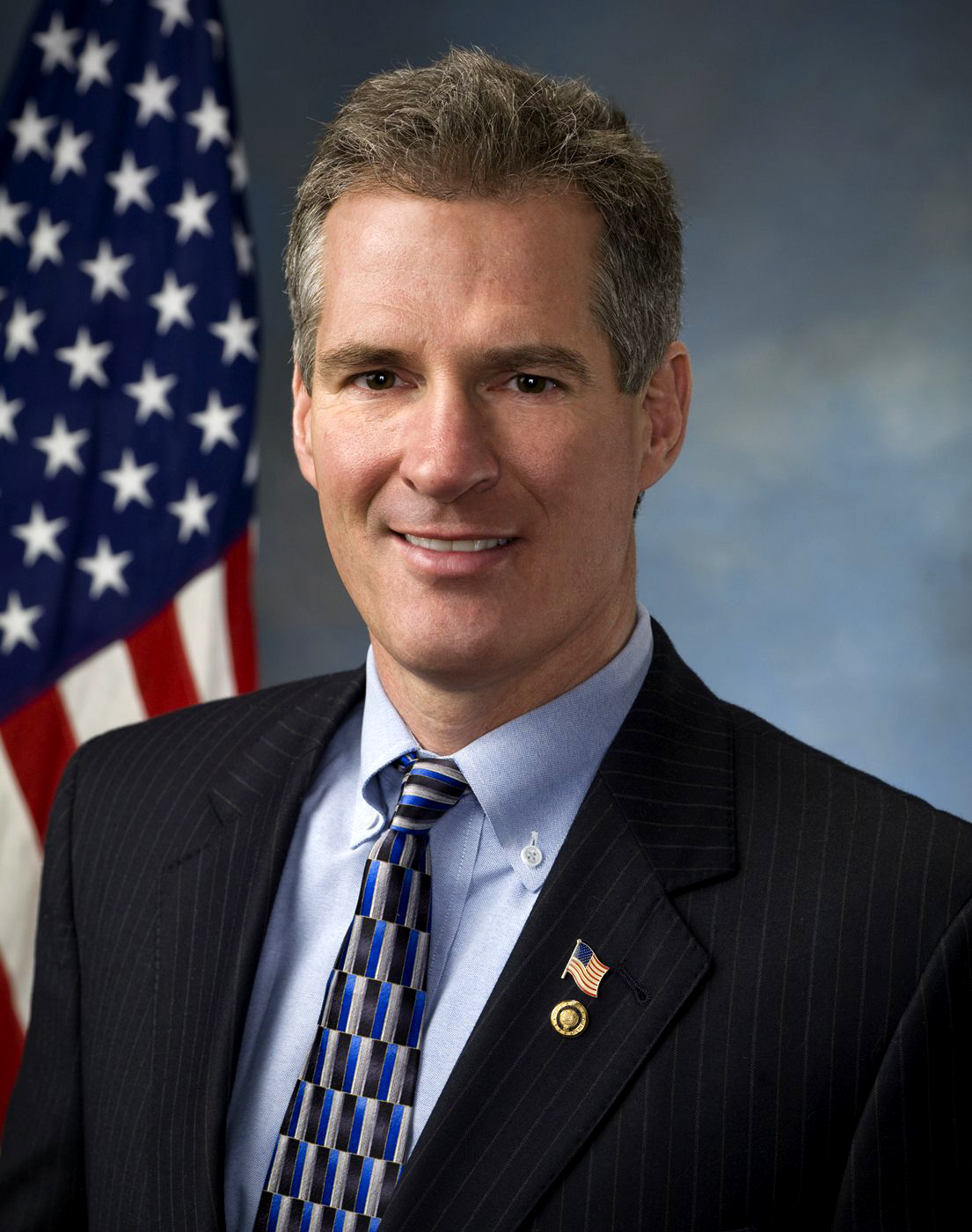
Sen. Scott Brown (D-MA)
At this point, it is somewhat useless to speculate over how a general election would go. However, it will be interesting to see how this race will turn out with all the nation's attention on it.
I think that it may be safe to say that many people reading this will have a merry Christmas. While this may be true, we as a society should remember those who will not, for whatever reason. We should remember the soldiers who won't be home, causing emotional strain on both themselves and their families; the single mothers who don't have the resources to give their children anything special; and for those across the world who don't have the luxury of celebrating the holidays.
While you enjoy one of my favorite holiday songs, please remember the less fortunate among us, and perhaps think of taking some time in the coming year to help improve their situation.
Since the massacre at Sandy Hook elementary school, a popular opinion has emerged on social networking sites and in the news media: That the near constant coverage and investigation of Adam Lanza will only incite more incidents like these.
The Left disagrees with the sentiment. It is our opinion that in order to abate gun violence, and in order to make sensible decisions, we must know as much about the attacker as possible.
Below, aggregated for the reader's convenience, are four of the most informative news articles on the internet regarding Adam Lanza. Consider Mr. Lanza and all his complexities, insecurities and faults when making future decisions about gun control
District of Columbia v. Heller, in which The Supreme Court held that "[t]he Second Amendment protects an individual right to possess a firearm unconnected with service in a militia, and to use that arm for traditionally lawful purposes, such as self-defense within the home."
However, SCOTUS also ruled that "[t]he Court’s opinion should not be taken to cast doubt on longstanding prohibitions on the possession of firearms by felons and the mentally ill, or laws forbidding the carrying of firearms in sensitive places such as schools and government buildings, or laws imposing conditions and qualifications on the commercial sale of arms."
"Our hearts are broken today -- for the parents and grandparents, sister and brothers of these little children, and for the families of the adults who were lost." -- President Obama
TUXTLA GUTIÉRREZ, Mexico u2014 Oscar and Jennifer Cruz knew that crossing the border would be the easy part.
The Salvadoran brother and sister made their way over the international line between Guatemala and Mexico with the help of a smuggler who guided them through the jungle. But soon afterward, Mexican immigration officers arrested the clean-cut teenagers on a bus in Tuxtla Gutiérrez, the capital of the southernmost Mexican state, Chiapas.
Like many other Central American youths who migrate on their own, Oscar, 16, and Jennifer, 13, were pushed by the danger of street gangs and pulled by hopes of joining their parents, who left El Salvador when their children were very young and settled in Las Vegas. The brother and sister embarked on the trek to the United States despite the horror stories about migrants getting robbed, raped, kidnapped or killed in transit across Mexico.
"We wanted to be with my parents," Oscar, a devout Christian, said in an interview at a detention center. "And there was also the threat from the gangs. Once I started high school, they tried to recruit me. What worried me most were the threats. The gangs fight for turf, do extortion, threaten families and deal drugs. The police are scared of them u2014 kids my age."
Oscar and Jennifer crossed a lawless, long-neglected border between Guatemala and Mexico, a 540-mile boundary snaking through mountains, jungles and rivers. It is a hotbed of threats: smuggling of people, drugs, arms and cash; abuse of migrants by criminals and security forces; violence and corruption that menace institutions and create fertile turf for mafias.
The border is also a window into the future. Profound shifts in economics, demographics and crime are transforming immigration patterns and causing upheaval in Central and North America. After decades in which Mexicans dominated illegal immigration to the United States, the overall number of immigrants has dropped and the profile has changed.
Although Mexicans remain the largest group, U.S.-bound migrants today are increasingly likely to be young Central Americans fleeing violence as well as poverty, or migrants from remote locales such as India and Africa who pay top smuggling fees. They journey through a gantlet of predators.
Mexico's southern frontier has become a national security concern for U.S., Mexican and Central American leaders. Interviews with U.S. and Mexican government officials, human rights advocates and migrants by a ProPublica reporter visiting the border showed how these converging trends are raising alarms.
"It is becoming imperative and urgent to immediately initiate and develop in the next few years a serious and coordinated regional strategic plan in the areas of security, control and development to prevent this border from sliding out of control and generating an experience with enormous gravity for the region," said Gustavo Mohar, a veteran immigration and intelligence official who ended his tenure last week as Mexico's interior sub-secretary for migration issues.
"The same way that it took the United States 30 years to reach a point of physical control on its border, Mexico needs a medium-range strategy," Mohar said. "But we will control it better with a strategic vision that part of the problem is Central American poverty and the drug trade."
The new Mexican administration of President Enrique Peña Nieto inherits repercussions of the transformation at the better-known, aggressively policed U.S.-Mexico border. Although the U.S. political debate often gives a contrary impression, illegal crossing at Mexico's northern border has plummeted.
Until 2007, the U.S. Border Patrol made an average of about 1 million arrests a year at the line, the overwhelming majority of them Mexicans. But there has been a marked decline since. Patrol statistics through July indicate U.S. agents made about 355,000 apprehensions at the border in the fiscal year that ended in September. An expected figure of about 260,000 arrests of Mexicans would be the lowest in more than a decade.
Smuggling of people and drugs, especially marijuana, persists across the U.S.-Mexican border. But the changes seem dramatic. In April, a landmark study by the Pew Hispanic Center in Washington, D.C., determined that, after accounting for Mexican immigrants who return to their homeland, the net in-flow of Mexicans to the United States has dropped to zero. The reasons include tougher defenses, stepped-up deportations, a long-term decline in Mexican birth rates and the simultaneous slump in the U.S. economy and growth of the Mexican economy.
Even if the U.S. economy improves, the demographic and economic evolution of Mexico appears to have ended the era of massive Mexican migration to the United States, according to experts and officials.
"Everybody agrees there's going to be some vacillation in the numbers, but I don't know of any serious observer or analyst who thinks we are going to revert to pre-2008 levels of Mexican immigration," said Doris Meissner, a former U.S. immigration commissioner and now a senior fellow at the Migration Policy Institute in Washington, D.C. "I don't see any evidence of that happening, not in the structural changes in Mexico such as birth rates, not in the enforcement at the border, and not in the forecasts of what kind of economy is to come in the United States."
For years, non-Mexicans have accounted for only a small fraction of U.S. border arrests. The proportion has changed, however, and Central American migration has surged during the past year. Statistics indicate that U.S. agents caught at least 90,000 non-Mexicans at the U.S-Mexico border in the fiscal year, the great majority of them Central American. The number almost doubles the previous year's tally and equals more than a third of the arrests of Mexicans.
The non-Mexicans include a subset of migrants from Asia, Africa, South America and the Caribbean. The relative numbers are small, but the smugglers are especially powerful because they charge up to $65,000 per client. Drug mafias have muscled in on the human smuggling trade. And U.S. counterterrorism officials worry that corruption and disorder could enable terrorists or foreign agents to use the region as a gateway to the United States or a base for plots.
Still, most non-Mexican migrants today come from three small and poor nations: Honduras, El Salvador and Guatemala. U.S. Border Patrol apprehensions of Hondurans rose from 12,197 in fiscal 2011 to 27,734 through August; Salvadorans from 10,471 to 20,041; and Guatemalans from 19,061 to 32,486.
Mexican authorities this year have detained 40,971 illegal immigrants, most of them Central Americans, a rise of about 15,000 during the past two years, according to the Mexican National Institute of Migration, that country's immigration service. Detentions of unaccompanied Central American minors also increased, Mexican officials said.
The motivations are not just economic. El Salvador and Honduras have the highest homicide rates in the world; Guatemala is extremely violent. Ingrained inequality, migration and strife devastate family structures and state institutions. Crime generates a conflict-driven migration that recalls the refugee exodus from the region's civil wars in the 1980s.
"They are expelled from their countries by fear," said Father Flor Maria Rigoni, a cerebral, bearded Italian priest who directs the Casa del Migrante shelter in Tapachula on the southwest corner of the Mexico-Guatemala border. "They are seeking the possibility to survive. The violence there drives them. The migrants don't talk about the economic situation of the U.S. u2014 they just bet on the future."
Central American street gangs have become formidable transnational mafias active in the United States and allied with Mexico's powerful drug cartels, which are expanding in Central America. Half the cocaine headed for the United States is off-loaded at the coast of Honduras, according to intelligence reports cited by U.S. officials.
For all those reasons, the southern border of Mexico is becoming a priority for security officials in Washington as well as Mexico City.
"We must continue to work together to prevent illegal flows of drugs, migrants, contraband, weapons and stolen goods across shared land borders," Homeland Security Secretary Janet Napolitano told Central American leaders at a conference in Panama in February. Her visit was part of a push by the Obama administration to beef up security, train border forces and improve regional cooperation.
The current immigration debate in Washington should be based on a realization that both the United States and Mexico are dealing with a new reality at their borders, officials and experts said.
"Changing demographics in Mexico make this situation a 'new normal' with profound implications for our southwest border," said a senior U.S. official who monitors Mexico and Central America and requested anonymity because he is not authorized to speak publicly. "This means that any demand for labor in the United States in the mid to long term would be met by other than Mexicans, at the outset principally by Central Americans. Proposals to reform our immigration laws should take that into account."
Peña Nieto met with Napolitano and President Obama in Washington last week. The Mexican president's advisers have announced plans to beef up defenses at Mexico's southern boundary and create an entity whose existence would reflect how much times have changed: a Mexican border patrol.
Zip-Line Across the River
The westernmost Mexican port of entry at the town of Suchiate accounts for 95 percent of Mexico's commercial traffic with Central America, most of it southbound exports. Soldiers, police officers and security guards watch the parade of northbound legal crossers on foot, bikes, motorcycles and vehicles on the bridge over the Suchiate River, which demarcates the international line.
Illicit activity is not hard to spot. Riverbank commerce thrives beneath the hot sun. Authorities do not interfere with rafts gliding back and forth between Suchiate and the Guatemalan town of Tecun Uman, where a swan perches on a rooftop and garbage is piled high beneath the border bridge. Gasoline and food products are smuggled south because they are cheaper in Mexico; people and drugs go north.
About 50 miles northeast, colorful ceramic tiles dot the walkways of the modern port of entry between Talismán, Mexico, and El Carmen, Guatemala. A youthful canine officer screening trucks for Mexican customs is sharp, trim and presentable; he was trained by U.S. border inspectors in El Paso.
But here too, smuggling takes place at high noon in plain sight. Beneath the border bridge on the Guatemalan side, smugglers charge illegal immigrants $1.50 to cross the narrow, fast-moving river on a raft made of giant black inner tubes with a plank lashed on top. The shirtless smugglers can be seen swimming behind the rafts, pushing migrants and luggage to the Mexican riverbank, where the crossers hurry into the underbrush.
Another option: the aerial route. Smugglers string tightrope-like cables between trees or buildings on the riverbanks within yards of the port of entry. Illegal crossers whiz north above the water on these makeshift international zip lines, unmolested.
Mexican authorities do little enforcement on the riverbank. Officials say it would disrupt a deep-rooted transborder economy and culture. Moreover, a front-line crackdown would require a large contingent of specialized law enforcement personnel and other defenses. That has not been feasible given budget constraints, political sensitivities about immigration, and the demands of the fight against drug mafias elsewhere, officials say.
Instead, Mexico's immigration service deploys patrols in strategic spots a few miles from the border. A major chokepoint: the rail yards of Arriaga, where illegal immigrants race their pursuers in hopes of hopping a freight train and making the clandestine trek across Mexico to the U.S. border.
Known as La Bestia (The Beast), the freight train is a magnet for predators. The dangers have been documented in accounts such as the book "Enrique's Journey" and the documentary "María en Tierra de Nadie" ("María in No-Man's-Land"). Smugglers, bandits and corrupt security forces swarm the rail line. Accidents kill or maim scores of riders who fall off trains or are run over.
The paramilitary-style Zetas drug mafia of northeast Mexico, and lower-level criminals seeking its favor, terrorize the smuggling corridors.
"The chiefs give the green light to new recruits to do their business on the train," said Father Rigoni of the Casa del Migrante shelter. "They monitor the recruits in their ability in their turf to handle logistics, strategy, organization. They are applying market policy. The Zetas choose a little gang in Tapachula: If you can prove you control the turf, and pay us $500,000, you can rely on us for military support."
Gangsters shake down smugglers and subject migrants to robbery, rape and extortion. They kidnap them and demand money from relatives back home or in the United States. Women and children are forced into sexual slavery. Detention centers and migrant refuges brim over with horror stories.
An increase in young migrants traveling alone comes after years in which Central American migration fluctuated: It peaked in 2005 and declined for a few years before the new increase, which analysts see as a result of lawlessness as well as deprivation. This year, the Casa del Migrante has housed more than 5,000 migrants in transit; the number of Hondurans seeking refuge this year increased 57 percent, and the number of minors jumped 82 percent.
Father Rigoni called them "lambs to the slaughter." That phrase comes to the mind listening to the account of Oscar and Jennifer Cruz, the teenage Salvadoran brother and sister who told their story at the detention center in Tuxtla Gutiérrez.
Oscar, who has a stylish haircut and new red gym shoes, aspires to work in a bank someday. Jennifer u2014 quiet, polite, wide-eyed u2014 wants to be a secretary. Their parents left the town of Usulutan when the children were small. The parents found jobs in Las Vegas, sending back enough money for grandparents to raise Oscar and Jennifer. Divided families like this are typical in El Salvador, Honduras and Guatemala. Jennifer said she knows her parents through "Skype, Facebook and the telephone."
Oscar and Jennifer decided to leave when the pressure from street gangs got too intense for Oscar at school. The family pooled resources to pay smugglers $10,000 for the trip; the parents insisted the youths travel in Mexico by bus, not The Beast. The dangers of home and the lure of the north overcame their fears. They made it across Guatemala unscathed, but were caught on a bus soon after crossing the line into Mexico.
"Relying on our faith, we decided to do it," Oscar said. "It was exciting and scary. I have two friends from school who left for the United States. Their brothers were already there. My friends didn't make it. They disappeared."
Abuse of migrants, especially Central Americans, is widespread and often involves corrupt officials. Hard numbers documenting the crimes remain elusive, however. In a study in 2010, Amnesty International asserted that hundreds of migrants go missing or are killed in Mexico each year. A Salvadoran advocate group quoted in the study said that 293 Salvadorans had died or disappeared in Mexico between 2007 and 2009.
Last year, a report by Mexico's National Human Rights Commission found that 11,333 migrants had been victims of kidnapping during a six-month period in 2011. Some officials and human rights defenders think that figure is too high. They cite the difficulty of gathering accurate data and the ambiguity of kidnapping, which can result from a voluntary deal with a smuggler that degenerates. But human rights advocates and Mexican and Central American officials agree about the dire plight of the border-crossers.
The gang members and other criminals who prey on migrants are sometimes fellow Central Americans. The fast growth of the Zetas has created a demand for foot soldiers that is filled partly by young Central Americans in states such as Zacatecas, according to U.S. and Mexican law enforcement officials. A Honduran ex-convict was among a group of Zetas gunmen who killed a U.S. agent of Immigration and Customs Enforcement in a highway ambush in central Mexico last year. Massacres in northern Mexico have been triggered by incidents in which Mexican drug traffickers tried to recruit groups of migrants as mules or henchmen, U.S. and Mexican officials say.
There is another Beast. The rail hub at Palenque, 200 miles to the northeast of Arriaga, also attracts border-crossers. Authorities estimate that up to 500 clandestine passengers ride each freight train coming out of Palenque. The game is played differently, however.
On a sweaty afternoon, hundreds of migrants fill the tumbledown Palenque neighborhood of Colonia Pakal-Na. They wear caps, bandannas, shirts as headdresses. Unconcerned by police driving by, the men panhandle, rest in the shade and talk on cellphones near train tracks strewn with trash. Handwritten signs in the windows of low-slung, multicolored stores and houses announce the use of bathrooms for a fee. Clothes hang in the chain-link fence of a basketball court dotted with sleeping figures. El Sabor Hondureño, a Honduran-owned diner a few yards from graffiti-covered freight cars, does a brisk business.
"They drink and take drugs and bother people coming through the area; there have even been victims of assaults," says José López, an official in Palenque City Hall, sounding not unlike U.S. residents complaining about immigrant laborers in their neighborhoods. "There is the problem of gang fights among them. There are no bathrooms where they can do their necessities, so they go in the open areas. They are rejected by the residents of the neighborhood."
Mexican immigration officials say their hands are tied. They conduct occasional raids. Were they to arrest migrants on a daily basis, officials say, they would have to transport them to Tapachula to be repatriated by bus. Resources are lacking.
Detainees cannot simply be deported south from Palenque because Guatemalan authorities cannot ensure safe passage through the jungles of the Petén region, an outpost of drug traffickers. As at the U.S.-Mexico border, the asymmetry between Mexico and Central America is dramatic.
"We cannot ask the Guatemalan government to control its border to prevent people from crossing when it is battling to maintain national stability and programs of development, education, rebuilding police and intelligence to fight gangs and drug trafficking," Mohar said. "For Guatemala, Honduras and El Salvador, the departure of their citizens has historically brought remittances that are fundamental to their economies. This has been also true for Mexico, but fortunately less and less today. The Central American countries don't have an incentive to do something at the border. But I'm afraid if they don't, and if we don't work with them, the problem will overwhelm us."
A study released recently by the Migration Policy Institute in Washington found that borders are "porous and uncontrolled" throughout Central America. Only four of the eight official crossing points between Mexico and Guatemala operate regularly, and secret landing strips for drug smuggling planes proliferate, according to the study. Border security suffers from the ills afflicting overall security, according to the study: insufficient resources, weak institutions, corruption and lack of continuity between administrations.
"Guatemala has not had a coherent border security strategy or policy for the last four years," the study states. "The government has ordered increases in police and military personnel sent to the border without providing these forces any new resources. As a result, these border build-ups have been short-lived."
It is harder than ever to sneak across the U.S.-Mexico border. As a result, Mexican officials detect a new trend.
"What we have in the last six months is a very significant increase in the flow of Central Americans who are not going to the U.S. but rather to stay in Mexico," Mohar said. He cites a presence of immigrants in the states of San Luis Potosí, Jalisco and Querétaro and "an enormous challenge with Central American children traveling alone who stay in Mexico City and live on the streets and are very vulnerable to joining gangs or being trafficked."
Smugglers Adapt and Thrive
Market conditions u2014 namely, the likelihood of getting caught u2014 dictated the deal that the smugglers made with Marco, an Ecuadoran who wanted to go to United States with his wife.
"The fee I paid included three attempts," said Marco, who asked that his full name be withheld for his safety. "This was my first try. I paid for a package. And if I don't want to keep trying, they said they will reimburse me 50 percent."
Marco is a compact 26-year-old with buzz-cut hair and a bemused expression. He was interviewed at the detention center in Tuxtla Gutiérrez while he awaited deportation after his arrest for crossing from Guatemala. He had hoped to reach New York, where his brother had spent six years working in construction, returned to their hometown of Azogues and bought himself a house and a pickup truck.
The Ecuadoran smugglers dealt with Marco almost exclusively by phone, he said. They charged $11,000, collecting a $3,000 down payment. Marco and his wife packed coats and hats because they were told they would spend four days walking through the desert with a group to enter the United States. They prayed at a shrine and set off, armed with a phone number and a password, to a hotel in Guayaquil. A woman facilitator gave them a new number and password and plane tickets to San Pedro Sula, Honduras, via Panama.
The couple took a bus from Honduras to Guatemala City. Local smugglers took charge of them. Marco and his wife slept in a safe house where the clients came from as far away as China. After another bus ride, they spent two days by mototaxi and on foot entering Mexico through the mountains. The group of Ecuadorans and Guatemalans, using the code name "Eagles," met a Mexican smuggler known as Chiclet at a cheap hotel in picturesque San Cristóbal de las Casas, according to Marco's account.
In Ecuador, the smugglers had promised that Marco and his wife would travel by bus in Mexico to avoid the perils of the freight trains. But Chiclet announced a change in plans.
"He told me we were supposed to go to Arriaga to catch The Beast, and we would go to the border and Houston," Marco said. "I had heard all about the train. I didn't want to go."
The Mexican smuggler went out, got drunk and didn't return until 4 a.m., Marco said. Instead of escorting his clients, Chiclet sent them to Arriaga on their own. Marco and his wife were arrested on a bus when immigration officials checked papers.
"It was the fault of the smugglers," Marco said. "They aren't trustworthy."
Smuggling is a major industry. Last year, Mexican authorities in Chiapas discovered two tractor-trailers carrying a total of 500 Central Americans, Indians and Chinese who had just crossed the Guatemalan border. Smuggling fees for immigrants from Asia and Africa depend on factors such as the length and risk of the trip and use of fraudulent documents. Chinese migrants pay as much as $65,000 and Indians about $25,000, according to U.S. border enforcement officials. If they cannot afford to pay upfront, clients borrow from family and associates or work off debts through indentured labor upon arrival in the United States.
The revenue from such valuable human cargo buys allies in government.
Mexican immigration investigators broke up a corruption ring last year after arresting three frightened Indians at the Tapachula airport. The Indians carried seemingly legitimate visas for Mexico but admitted their intent to sneak into the United States, according to their statements to Mexican investigators obtained by ProPublica.
A husband and wife named Nareshkumar and Urbilaben Patel explained that everything was arranged before their departure. They left Delhi for Dubai, where they spent a month and then flew via Amman and Madrid to Guatemala City. After the Indians were smuggled across the Suchiate River by raft, a Mexican lawyer gave them documents and told them to pose as tourists, according to the statements.
Investigators arrested the lawyer, a former state prosecutor from Tabasco who obtained fraudulent visa papers from accomplices in the immigration bureaucracy in Mexico City. The ex-prosecutor was charged with smuggling and the officials were fired, authorities said.
The smuggling flow changes rapidly. Mexico detained 723 Eritreans in 2010, that year's largest group of illegals who were not from Latin America. This year has brought a fourfold increase in Cubans: 2,593 so far. Farther south, the numbers are similar. In Panama, a gateway for migrants arriving from South America, authorities arrested 2,117 Cubans in the first 10 months of the year, a fivefold rise. Many Cubans come through Ecuador, where visa policies are lax, according to U.S. and Mexican officials.
Cubans speaking melodious Caribbean Spanish congregate in the patio of the federal immigration detention center in Tapachula. A muscular, gray-eyed young man from the town of Bayamo explains that he voyaged on a makeshift vessel to Honduras. He waited and worked odd jobs for a year, when his absence from Cuba meant he had legally renounced citizenship. His goal is to join relatives in Hialeah, Fla. He chose the route because U.S. refugee law favors Cubans who arrive at a land border.
"If I arrive in a raft in Miami and the Coast Guard catches me at sea, they deport me right back, chico," said the young Cuban, who asked not to be identified because of his migratory situation. "Matamoros, Mexico, that's where I want to go."
The repercussions of the evolving smuggling patterns bubble up at the U.S.-Mexico border as well. During a hectic period in March of last year, one in four migrants arrested in the Border Patrol's Rio Grande Valley sector in south Texas were non-Mexicans.
Several recent cases have raised concerns about the potential for terrorists or foreign intelligence operatives to tap into the smuggling infrastructure. Last year, a Somali was sentenced to 10 years in prison in Texas on immigration charges. Ahmed Muhammed Dhakane led a ring that smuggled East Africans to the United States via Brazil, Guatemala and Mexico and admitted that he and some of his clients had links to Somali terrorist groups, according to U.S. court documents. Dhakane boasted that he made as much as $75,000 a day smuggling Somalis, documents say.
In a case that startled law enforcement and intelligence agencies, an Iranian-American pleaded guilty this year in federal court to a plot to hire hit men from a Mexican cartel to assassinate the Saudi ambassador to Washington. Intercepts and other evidence showed that the defendant was working for Iranian intelligence chiefs, who provided $100,000 for the plot. The Iranian agent lived in Corpus Christi, Texas, and traveled back and forth frequently to Mexico, where he developed contacts among drug traffickers, according to court documents.
Counterterrorism officials worry that extremist operatives could establish a presence in Central America by taking advantage of porous borders, the availability of fraudulent documents and mafias involved in arms, drugs and people smuggling. Mexican intelligence works closely with U.S. counterparts to aggressively target migrants from nations such as Iran or Somalia with hostile governments or active terror groups u2014 Special Interest Aliens, in the parlance of U.S. border agencies.
Mexican officials tend to see the U.S. worries about terrorists as exaggerated, however. In September, police in the city of Merida acting at the request of U.S. officials arrested several suspects, including a former California imam wanted for a U.S. parole violation and found that he carried a fraudulent passport from Belize, which neighbors Guatemala and Mexico, according to Mexican and U.S. officials. There were initial suspicions that the imam and his Belizean associates had Hezbollah links, but Mexican and U.S. officials subsequently downplayed that aspect of the case.
U.S. officials say the larger intelligence picture justifies their concerns, especially about a presence of Iranian and Hezbollah operatives in Latin America.
A Mexican Border Patrol?
The detention center in Tapachula, run by Mexico's National Institute of Migration, is the largest facility of its kind in Latin America. It embodies the contradictions and challenges of the border.
The clean, modern complex has a capacity for 950 men, women and children. The administrators look more like social workers than jailers. It has a game room and a library, where a small cheerful boy plays on a computer. The boy's mother is Eritrean; he is stateless, born in South Africa during a yearlong odyssey that led through Brazil and Guatemala before falling short of the destination: Chicago.
Mexican immigration officers are unarmed, enlisting federal and state officers for support on investigations and operations as needed. Although corruption and abuse are longtime problems in the immigration service, it is not a border patrol or even a traditional police force.
At least in theory, Mexican immigration policy is driven by human rights concerns. A new law passed last year spells out liberal policies toward illegal immigrants in Mexico and places limits on enforcement.
In the United States, the changes at Mexico's borders will have an impact on the immigration debate. After President Obama's re-election, Republicans looking to court Latino voters have expressed new interest in immigration reform. The Obama administration argues that the drop in illegal crossings and the security buildup at the U.S. border have established a framework for reform. But the changes at the Southwest border have not necessarily sunk in among politicians and the public.
"Whether the perception has caught up with the reality is not clear," said Douglas Rivlin, chief spokesman for Rep. Luis Gutiérrez, D-Ill., a leading proponent of immigration reform. "There's often a big gap between what Congress is talking about and what the reality is. People probably aren't aware the flow is so low."
One goal of immigration reform will be legal status for more Central Americans, reducing the number of migrants who transit through Mexico, Rivlin said.
"The goal is to have an immigration system in which people board a plane in San Salvador and are not taking the risk of riding on top of a train through Mexico," he said. "That's what gives the U.S. security; that's what means less deaths on the border; that's what gives us one labor market rather than several."
Just as the United States and Mexico work together more closely than ever against drugs, there is unprecedented cooperation on border issues. In the United States, representatives of Mexican consulates routinely visit U.S. Border Patrol stations and are provided with office space to attend to Mexican detainees. U.S. agents stationed in Mexico share information in real time with Mexican aviation security authorities to screen incoming passenger flights. Similar programs are expanding in Central America.
Nonetheless, Mexican human rights advocates and politicians object to measures such as Mexican police stopping Central Americans from riding the freight trains, saying they do not want Mexico doing the dirty work of the United States.
Mexico still suffers nagging inequality and crime. But last year's Pew study cited the growth of the middle class, the decline in Mexican immigration, lower birthrates and higher rates of literacy and education. If those trends continue, Mexico seems headed toward a transition that could spur social tension u2014 and tougher border enforcement policies
"Mexico is increasingly finding itself in the most complex situation for a country in regards to migration: It is simultaneously a sending country, a transit country and a receiving country," said Meissner of the Migration Policy Institute. "Those are very different identities to reconcile. They really have to build an infrastructure on that border."
The rise of Central America as a base for drug mafias adds pressure. President Peña Nieto's aides have announced a plan for the southern Mexican border featuring 10 new ports of entry and legal status for Guatemalan laborers in Mexico's four southernmost states. The new administration intends to create a Mexican border police of 5,000 to 8,000 officers to patrol areas between official crossings at the Guatemalan border, officials said.
The mission of the new force will be to prevent the flow of "drugs, arms and to a certain extent so people don't cross," said Arnulfo Valdivia, immigration coordinator for the president's transition team, according to a report in El Universal newspaper.
The extent to which this border patrol will intercept illegal crossers remains to be seen. The plan is part of a larger security restructuring, discussed during Peña Nieto's visit to Washington last week, that will expand the role of Mexican federal law enforcement.
If the past is a guide, Washington is likely to contribute border-related training, resources and technology to help Mexico and Central American nations target organized crime, but will tread lightly to avoid the perception that it is intervening directly in other countries to block U.S.-bound migration. The U.S., European Union and United Nations contribute to a number of initiatives to strengthen security policy in Central America.
Politics aside, the obstacles to controlling Mexico's southern line are daunting. The geography is rugged. Mafias overwhelm opponents with firepower and corruption. There are other budget demands in Mexico, let alone in Guatemala and its neighbors.
Experts say the strategy must be smart and targeted. An example: In response to the surge of illegal migrants from India, most Central American countries have stemmed the influx by imposing a visa requirement on Indians.
The study by the Migration Policy Institute cautioned against a narrow focus. Because mafias are often stronger than the state in the remote border regions, reforms should focus on establishing the rule of law and improving safety in those areas and not just at the international line, the study said.
Mohar, the veteran Mexican official, calls for a regional approach that addresses violence and poverty in Central America as well.
"Law enforcement and security are not enough," he said. "The truth is that Central America is a small region where investment by the international community, the United States and international entities could be relatively low compared to the risk of not doing anything. The border is an expression of problems that exist far from the border."
Recent commentary by George Will of the Washington Post deftly explains how college campuses continually and unnecessarily restrict the free speech rights of its students. Imparting the necessity of this freedom is a continual goal of this paper (as can be seen here).
Mr. Will argues that in order to encourage diversity (another concern of this paper) university's find it necessary to stamp on freedom of speech.
Texas A&M, the university which this journalist attends, makes a special appearance, because of its promises to protect students "from indignity of any type."
by Amanda Zamora ProPublica, Nov. 15, 2012, 5:31 p.m.
This week, Pulitzer-Prize winning reporter Peter Sleethanswered questions from Redditors on the revelation that field reports have been lost or are missing for many Army units deployed in Iraq and Afghanistan. Below, highlights of that discussion.
Q: How far does this problem reach? Are you aware of any issues like this with the intelligence agencies? I find it funny/sad that veterans are losing benefits and care because the army couldn't get their version of Excel installed. But there are over 3,000 pages of documentation into the Petraeus affair. u2014 TommyFoolery
A: Senior officers tend to keep their own records quite well, they are conscious of their own history, for certain. We are now exploring whether these missing field records are causing problems with intelligence activities, as a matter of fact.
Q: How the military has dealt with what I'm sure is a recurring problem over the last several decades? Is the problem better/worse?u2014amzam
A: My belief is that lost records are a constant in a large bureaucracy like the military since the beginning. However, what we are talking about in our story is a massive loss of field records in volumes never before seen. Understand that field records are a distinct category from medical or personnel records, which are kept in separate pipelines, so to speak.
Q: You document the impact on veterans seeking benefits. Are there implications for how the war is remembered? u2014 collo229
A: Yes, history is written from these records.Field records are used by historians for their singular ability to go to an exact spot in time. For example, a few years back I was working on a book about a company of Civil War soldiers. Using field records they recorded, I was able to follow them campsite by campsite through three years of war. I mean, they were so detailed I could go to each site across the South.
Q: Were you really that surprised to find the largest bureaucracy in the U.S. federal government was so inefficient? I'm surprised they can find any records. u2014 IhaveSomeQuestions56
A: I was surprised because the U.S. Army has an efficient track record in keeping field records back to the Revolutionary War. It only really fell apart with the onset of computers.
Q: Do you think this was the result of peacetime lack of diligence, and are veterans organizations going to coordinate a response, e.g. organize a massive organized march on the Pentagon? u2014 MomsHugs
A: Yes, I do think this was a lack of planning during peacetime. It is terribly sad the money and time that was wasted. As to vets organizations, it is a strange mix, some are so tied up with the VA, in my opinion, they cannot afford to anger them. Yet plenty of the vets organizations are mad about this and I expect you will see them petitioning Congress.
Q: How much of the missing records do you believe are due to commanders covering their (or others) ass(es)?[TD1]u2014 TommyFoolery
A: Good question, I imagine it happens occasionally, but in 10 months of reporting I did not find evidence of anything nefarious. Rather, it was a mix of poor training, worse execution and inexcusably sloppy behavior.
Q: That was my first reaction when I read that units were wiping hard drives before they left them for their replacements. Nothing says teamwork like making the new guys start from scratch. u2014 TommyFoolery
A: What typically happened was the departing unit would clear the hard drive to make room for the new unit's data. So the departing unit would leave maybe the last 60 days activity, then clean the rest of the hard drive to allow for more storage capacity. Or, they cleaned them because they were ordered to for security reasons.
Q: Do you reckon some records may have been consciously "lost" to bury the truth, perhaps, on atrocities military personnel may have committed while on the tours? What happens to accountability where there are no records? Who takes the fall for this? u2014 OjayisOjay
A: That is a popular thought out there; I really don't think it happened much, if at all. That said, it would be unwise to rule it out. Accountability is absent, in answer to your excellent question. As to who takes the fall, we shall see. We are going to keep pushing on this story. We think there is much more that is buried here.
Q: What do you think the best solution to this problem is? u2014 IhaveSomeQuestions56
A: the best solution would be rigorous training of senior officers and penalties for not keeping records properly, like demotion.
Q: What advice would you give to active soldiers in order to lower their risk of falling victim to this when their time comes? u2014 TommyFoolery
A: I would tell soldiers to get copies of everything from their deployment orders, to their medical records, to whatever field records they can that involve them and keep them safe, send them home, whatever. A soldier can always ask to see what relevant records they have through the U.S. Army's Joint Services Records Research Center, and for Marines, through the Marines. If there records are missing, field records in particular, make sure you keep a contact list for your commanding officers and other soldiers once you get home. You can use your comrades for "lay" testimony that will substitute for missing records.
Q: Given your line of work, how much do you wish your name was Peter Sleuth? It's only one letter away. u2014imnotyourbloke
A: I've been doing this work for nigh on 30 years. I have heard that, and much worse versions of my name. Although I am a fan of the PBS show "Sherlock Holmes" with Jeremy Britt.
Peter Sleeth is a veteran investigative reporter who covered the Iraq war for The Oregonian and helped the paper win a Pulitzer Prize in 2007 for breaking news. Now freelancing, his most recent piece for the Oregon Historical Quarterly is a profile of progressive-era activist Tom Burns.
SHARE YOUR STORY: Are you a veteran who can't obtain your military field records? We want to hear from you.
WATCH: Peter Sleeth and Seattle Times reporter Hal Bernton discuss veteran benefits on Huffington Post Live.